 Insurance
 Health Care
 Construction
 Professional Services
 Financial Services
 Mobile
 Real Estate
 Project Management
 Client Background
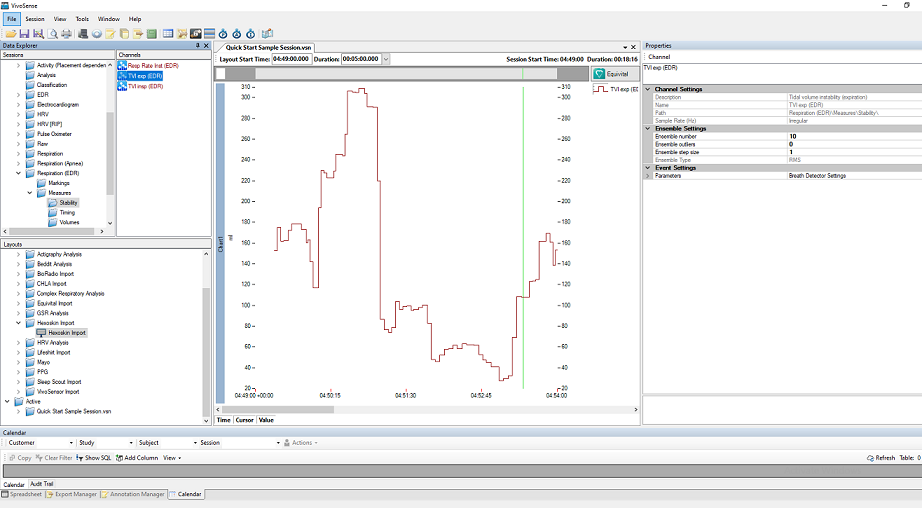
Since 2010, VivoSense has been helping clinical researchers analyze and interpret wearable sensor data to improve patient research and care. Their proprietary Vivosense software is a software platform designed for physiological signal analysis, visualization, and interpretation. It allows researchers and clinicians to analyze and extract valuable insights from various types of physiological signals such as electroencephalography (EEG), electrocardiography (ECG), electromyography (EMG), and others.
The software supports a wide range of data acquisition devices, including wearable sensors, video cameras, and other types of physiological monitoring equipment and helps provide real-time visualization of physiological data and advanced data analysis tools. Their innovation in the pharmaceutical clinical trial industry involves the development of new digital biomarkers using their software.
 Challenges
VivoSense facilitates the reading and analysis of data from various sensors. As the nature of data generated by individual sensors advances, the VivoSense application requires adjustments to accommodate these changes. Given the diverse range of sensors supported by the application for analysis, Vivosense sought a partner capable of integration of new sensor data analysis and also who could support to enhance their existing application through modifications and improvements.
 Solutions
Rheal contributes to the Vivosense application by integrating new features and refining existing functionalities. We have created a Unit Testing project that compares channel data generated from the Vivosense stable release and the ongoing development version. Developers use the test report to evaluate the acceptability of changes related to data calculations and analysis. Furthermore, we assisted in eliminating the third-party component responsible for critical calculations in the application. By removing this dependency, the application now operates independently of third-party components, resulting in cost savings for the company by eliminating the need for license renewals.
Given the numerous features of the application, here are a few key highlights:
-
GUI:
The VivoSense graphical user interface stands out for its intuitive and user-friendly design. The exploration and analysis of physiological data are carried out through panels, that can be relocated within the software by a simple drag-and-drop maneuver. This interface ensures a quick and efficient drill-down to the most relevant derived measures and statistics, simplifying the overall analysis process.
-
Importing:
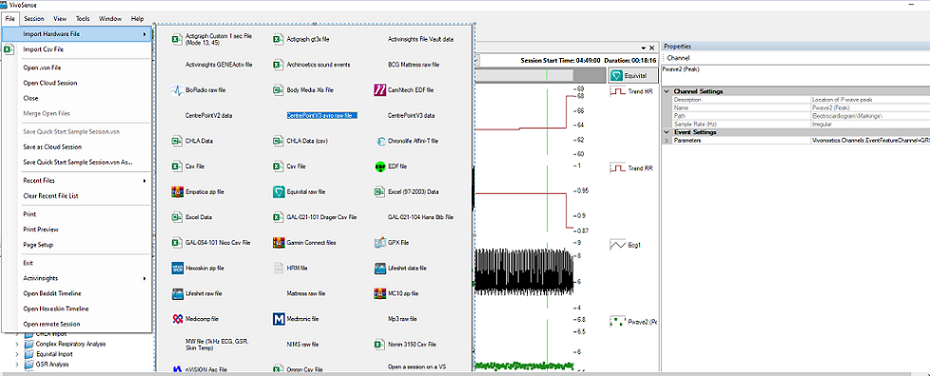
In the diverse ambulatory sensor market, spanning from Bluetooth wrist sensors to sensor-equipped garments, most sensor data can be effortlessly exported in ASCII format from the Vivosense application. Additionally, the software efficiently imports data in common formats such as CSV, Microsoft Excel and EDF (European Data Format)
-
Integration:
Integration can be a tedious and time-consuming barrier to actually viewing one’s data. VivoSense simplifies data integration with its Synchronization and Merge module, streamlining the alignment of files from different sensors. This module offers visual tools for alignment, supporting synchronization through annotations, a user-friendly point-and-click process, or automatic analysis. After aligning data streams, VivoSense's merge function combines essential channels from multiple recordings into a single, time-synchronized file, eliminating the hassle for users.
-
Visualizing:
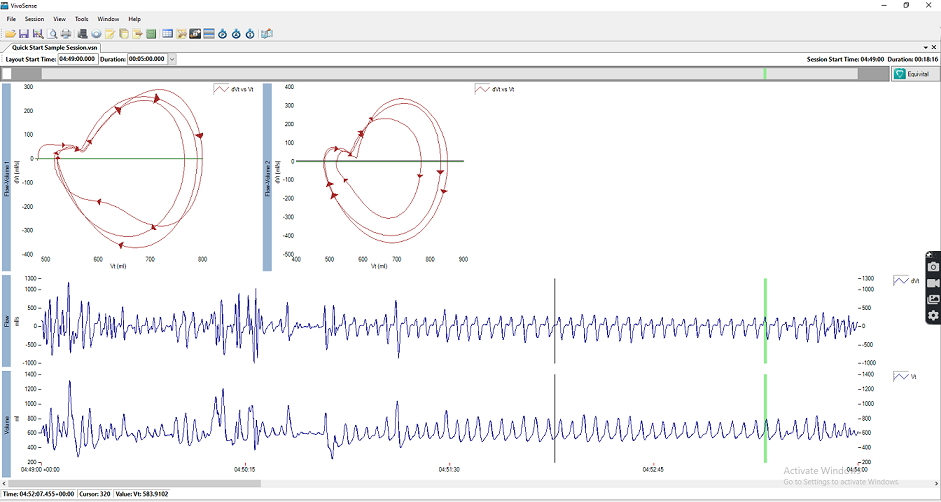
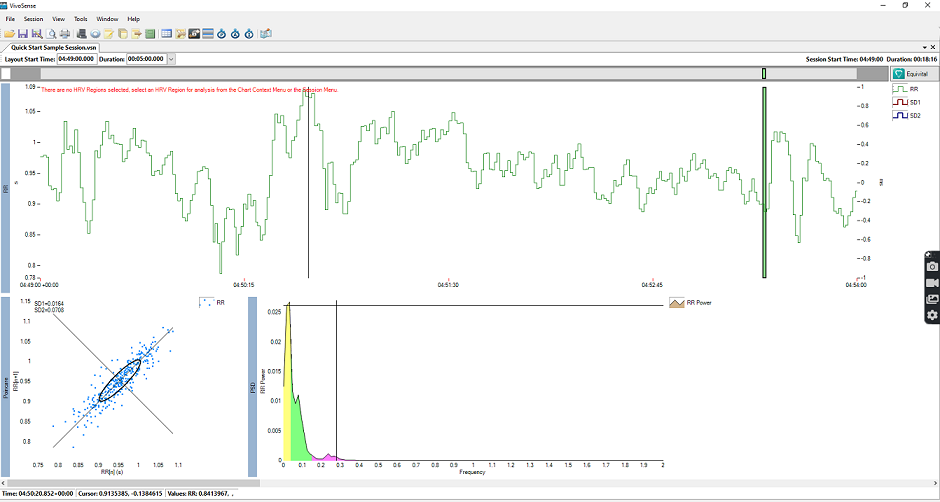
VivoSense simplifies data visualization by displaying continuously derived metrics simultaneously for a comprehensive understanding. The central window allows viewing data streams from any sensor, synchronized seamlessly with the Synchronization and Merge module. VivoSense smartly graphs high-frequency data and long-term trends in a unified view, and users can create custom layouts with a single click for efficient analysis. Combining engineering smarts with visual clarity, VivoSense meets the needs of both researchers and engineers.
-
Batch processing Module:
This module streamlines the processing of multiple recordings at the push of a button, minimizing the need for user input. Users can effortlessly export outcome measures into a single file, configured for subsequent statistical analysis.
 The Result
The test project speeds up the generation of validation data from the developed code, leading to a decrease in testing time and increased margin for data correction.